By Aria Sinclair
A supplement for muscle recovery can help reduce soreness, support repair and make it easier to train consistently, but the evidence varies a lot from one ingredient to the next. This guide explains what muscle recovery actually involves, which supplements have the most research behind them, how to evaluate the options, and where supplements fit alongside sleep, nutrition and training load. By the end, you should be able to judge a supplement for muscle recovery on its evidence rather than its marketing.
What Muscle Recovery Actually Involves
Recovery after resistance training is a set of overlapping processes: clearing metabolic byproducts, repairing micro-damage to muscle fibers, restoring glycogen, reducing inflammation-related soreness, and rebuilding the nervous system’s readiness to produce force. Delayed onset muscle soreness (DOMS) usually peaks 24 to 72 hours after unfamiliar or high-volume eccentric work, while strength and performance markers often lag behind perceived soreness.
Shopping for one? See our guide: 10 Best BCAAs for Muscle Recovery: 10 Top Picks Compared (2026).
Because these processes run on different timelines, no single supplement covers all of them. A useful way to think about a supplement for muscle recovery is to ask which specific process it targets and whether human trials have measured that process directly.
Evaluating Supplements for Muscle Recovery
Step 1: Identify the Outcome You Care About
Most people mean one of three things by recovery: less soreness, faster return of strength or power, or better tolerance for frequent training. Each outcome points toward different ingredients. Soreness studies often measure pain on a visual analog scale, while performance studies measure force output, jump height or repetitions to fatigue.
Step 2: Check the Type of Study
Animal and cell studies are useful for generating hypotheses but rarely translate directly to people. Look for randomized, placebo-controlled trials in trained adults, ideally with sample sizes above 20 per group and reported outcomes at multiple time points after exercise.
Step 3: Look at Dose and Timing
Many positive trials used specific doses (for example, a particular grams-per-day amount for several weeks) that a product label may not match. Compare the dose used in the research with what the product provides per serving.
Ingredients With the Most Research
Protein
Protein is the most studied nutritional input for muscle repair. Meta-analyses of resistance training generally find that daily intakes around 1.6 g per kilogram of body weight support muscle protein synthesis, and many trials suggest that somewhere in the range of 1.6 to 2.2 g/kg/day is effective for people training to build muscle. Whey and other complete proteins are convenient ways to reach those totals. Protein powder is a food, not a drug, but it is a supplement in the commercial sense and is the most evidence-backed option here.
Creatine Monohydrate
Creatine monohydrate is one of the best-researched supplements in sports nutrition. The standard research dose is about 3 to 5 g per day, and multiple trials have found that it can increase training volume and lean mass gains over several weeks. Its recovery effects are less clear-cut, with some studies reporting faster recovery of performance between sets and others showing little difference in soreness. For more detail on forms and comparisons, see Creatine Supplements for Muscle Growth: 8 Best Picks Compared (2026) and 8 Best Creatine Monohydrates for Muscle Growth: Expert Picks Compared.
Tart Cherry
Tart cherry juice and concentrate contain anthocyanins and have been studied for their effects on soreness. Several small trials report reduced muscle soreness and faster strength recovery after eccentric exercise, typically when the product is taken for several days before and after the session. Results are mixed, and some studies find no effect, so expectations should be modest.
Omega-3 Fatty Acids
Fish oil (EPA and DHA) has shown modest reductions in soreness and inflammatory markers in some trials, but evidence for improved strength recovery is inconsistent. It is generally considered a reasonable general health supplement with a weaker case as a recovery aid specifically.
Vitamin D and Magnesium
These are relevant mainly when a person is deficient. Supplementation in people with adequate levels has not consistently improved recovery in trials. Blood testing through a healthcare provider is the way to determine whether either one is needed.
Ingredients With Weak or Limited Evidence
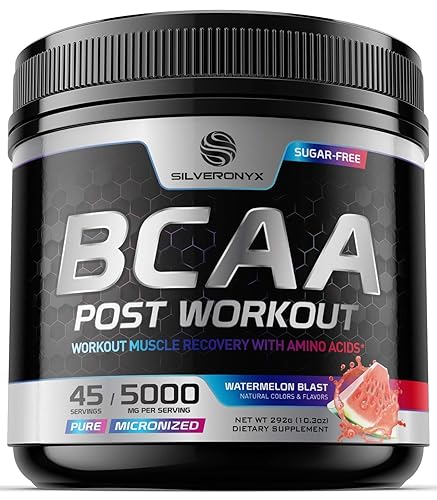
Many products marketed for recovery contain amino acid blends, BCAAs without adequate protein, glutamine, or proprietary “recovery blends” with undisclosed doses. Glutamine has not reliably improved recovery in trials. BCAAs alone are unlikely to add much when total daily protein is already adequate. Blends with proprietary formulas make it hard to compare ingredients, so check the label for specific amounts of each active ingredient.
How Supplements Fit Into a Recovery Plan
Supplements work best as a small layer on top of fundamentals. Sleep is probably the largest single lever: the stages of sleep, particularly slow-wave and REM, carry out much of the hormonal and neural work of recovery, as discussed in How Different Sleep Stages Affect Muscle Recovery. Total daily protein, adequate calories, and sensible training volume matter more than any tablet. Timing matters less than total intake for most people, though The Role of Meal Timing in Muscle Recovery After Workouts covers the cases where timing may matter more.
Common Mistakes
- Assuming a supplement will cover for poor sleep or excessive training volume.
- Choosing a proprietary blend without knowing the dose of each ingredient.
- Taking a supplement at a dose lower than the one used in the studies that support it.
- Judging effectiveness by how sore you feel rather than by strength, performance or training consistency.
- Ignoring persistent fatigue or performance decline, which can signal overtraining rather than a need for more supplements. See Signs of Inadequate Recovery and Overtraining.
Practical Checklist
- Define your recovery goal: soreness, performance between sets, or training tolerance.
- Confirm total daily protein is in the range supported by research for your training.
- Consider creatine monohydrate at roughly 3 to 5 g per day if it fits your goals.
- Check that any product lists exact amounts of its active ingredients.
- Track sleep and training load for at least four weeks before judging results.
- Review any supplement with a qualified healthcare professional, especially if you take medications or have a medical condition.
Recommended gear
Several tools can help you track whether your recovery approach is working. A simple recovery monitor can show trends in sleep and resting heart rate, and the approach is covered in Using Heart Rate Variability (HRV) to Monitor Recovery. Consider the following types of product:
- A smart ring that tracks sleep and heart rate variability, which can help you spot fatigue patterns over time. View on Amazon
- A basic food scale for measuring protein portions accurately, which makes it easier to hit daily targets. View on Amazon
- A foam roller for soft-tissue work between sessions, though its evidence for recovery is modest and mostly subjective. View on Amazon
Tips
- Log soreness, sleep and training volume in the same place so patterns are easier to spot.
- Change one variable at a time when testing a new supplement.
- Prioritize consistent sleep schedules before adding anything else.
- Re-evaluate your approach every 8 to 12 weeks as training goals change.
FAQ
What is the best supplement for muscle recovery?
Protein is the most consistently supported option, followed by creatine monohydrate. Other ingredients have more mixed evidence, so results vary by individual and goal.
Does creatine help with muscle soreness?
Evidence is mixed. Creatine has clearer effects on training performance and lean mass than on soreness specifically.
How long does it take to notice recovery benefits from a supplement?
Many studies run for four to twelve weeks. Subjective soreness may change sooner, but performance changes usually take several weeks of consistent use.
Is tart cherry juice worth trying?
Some trials report reduced soreness after hard eccentric training, but results are inconsistent. It is a low-risk option for many people, though you should check the sugar content of juice products.
Can I get recovery benefits from food alone?
Yes, for many people. Adequate protein, carbohydrates, fats, micronutrients and sleep can cover most needs. Supplements are optional rather than required.
Are BCAAs necessary if I eat enough protein?
Usually not. When total protein intake is adequate, additional BCAAs have not reliably added benefit in trials.
Should I see a professional before starting a supplement?
Yes, particularly if you take medications, are pregnant or breastfeeding, have kidney or liver conditions, or have a history of medical issues. A doctor or registered dietitian can help you decide what is appropriate.
Conclusion
A supplement for muscle recovery is most useful when it targets a specific outcome and has been tested in trained people at a relevant dose. Protein and creatine monohydrate have the strongest support, while many popular blends have little independent evidence. Build your approach on sleep, nutrition and sensible training load first, and treat supplements as a modest addition that you evaluate over several weeks.
Related reading
Ready to choose one?

About Aria Sinclair
Aria focuses on practical advice for fitness science explainers: what matters before you buy, what to skip, and how to get more out of what you already own.