Quick answer
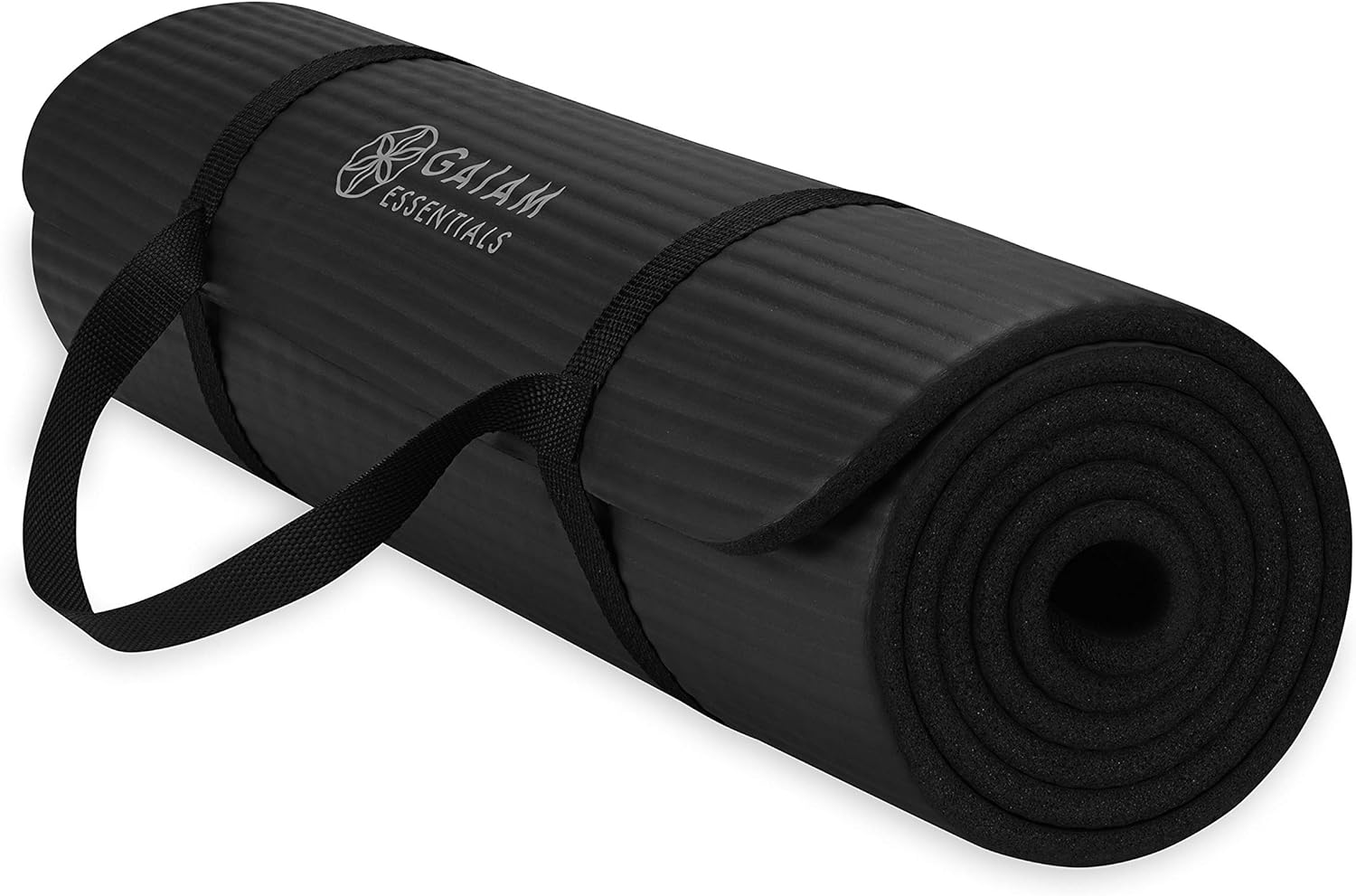
Our overall pick for a versatile, cushioned mat is the Gaiam Thick Yoga Mat. Other picks suit those needing extra thickness for joint support, a foldable design, or a firmer, non-slip surface.
An exercise mat is a foundational piece of home fitness gear, providing a stable, cushioned surface for everything from yoga to bodyweight training. The best exercise mat for you depends on the type of cushioning you prefer, the activities you do, and how you’ll store it. We compared manufacturer listings and specifications for several widely available thick foam mats to highlight their key differences.
This roundup focuses on mats that prioritize cushioning and comfort, which can be especially helpful for workouts on hard floors or for those who need extra joint support. For a broader look at different types of fitness accessories, see our guide on Exercise Accessories Explained.
Our picks at a glance
Pros
- Listed extra-thick 10mm NBR foam for joint cushioning
- Includes an adjustable carrying strap
- Textured surface is intended to help reduce slipping
Cons
- Care instruction is hand wash only
- The listing does not mention suitability for sweaty or hot yoga practices

Pros
- Listed half-inch thickness for cushioning
- Includes an elastic carrying strap
- Textured surface for traction
Cons
- Care instruction is hand wash only
- The listing does not mention specific grip performance during sweaty workouts

Pros
- Listed 1-inch thickness for pressure point relief
- Non-slip material for grip
- Care instructions allow for machine washing
Cons
- Heavier than other options at 2.2 pounds
- The listing does not specify the exact foam type beyond 'foam'

Pros
- Listed 2-inch thickness for maximum impact absorption
- Foldable with handles for easy transport
- Mats can be connected to create a larger workout space
Cons
- Bulkier and heavier at 4.1 pounds
- Care instruction is hand wash only
- The listing does not mention a non-slip surface texture

Pros
- Latex-free NBR foam construction
- Includes a carrying strap
- Textured surface for stability
Cons
- Shorter length (68 inches) compared to other mats
- Care instruction is hand wash only
How we chose
We compared manufacturer listings and specifications on Amazon as of October 2026. We did not test, use, or review any products hands-on. Our selections are based on comparing the listed features, materials, dimensions, and care instructions to identify mats suited for different primary uses.
The main criteria we looked at were thickness and cushioning material, surface texture and grip claims, included features like carrying straps, dimensions, and care instructions.
Best Exercise and Yoga Mats: our picks in detail
1. Best overall: Gaiam Thick Yoga Mat
The Gaiam mat is listed with 10mm (approximately 0.39-inch) thick, high-density NBR foam designed for plush cushioning to help reduce pressure on joints. Its textured surface is intended to help reduce slipping during dry workouts. The mat includes an adjustable carrying strap for transport and storage.
Made from nitrile butadiene rubber (NBR), it is listed as 72 inches long by 24 inches wide. The listing notes the product care instruction is hand wash only. It is promoted for yoga, Pilates, stretching, and floor exercises on hard surfaces.
Best for: A versatile, cushioned mat for general low-impact floor workouts, yoga, and Pilates.
Pros
- Listed extra-thick 10mm NBR foam for joint cushioning
- Includes an adjustable carrying strap
- Textured surface is intended to help reduce slipping
Cons
- Care instruction is hand wash only
- The listing does not mention suitability for sweaty or hot yoga practices
2. Best for basic cushioning: AmazonBasics Extra Thick Mat
The AmazonBasics mat is listed as 0.5 inches thick and made from 100% NBR foam, offering padded support and shock absorption. It features a textured surface for extra traction and includes an elastic carrying strap. The mat is listed at 73.2 inches long by 24.3 inches wide.
According to the listing, it is constructed from durable foam that is stretchable and springs back into shape. The product care instruction is hand wash only. It is promoted for yoga, gym, and everyday exercise.
Best for: A straightforward, thick foam mat for general home exercise and stretching.
Pros
- Listed half-inch thickness for cushioning
- Includes an elastic carrying strap
- Textured surface for traction
Cons
- Care instruction is hand wash only
- The listing does not mention specific grip performance during sweaty workouts
3. Best for firm, thick cushioning: Retrospec Solana Yoga Mat
The Retrospec Solana mat is listed as 1 inch thick, made from foam, and described as firm. It features a non-slip material intended to keep you steady and includes a nylon carrying strap. The mat measures 72 by 24 inches.
The listing states the mat is BPA-free and free of phthalates, heavy metals, and latex. Care instructions allow for machine wash or hand washing. It is promoted for fitness, stretching, Pilates, and hot yoga.
Best for: Those who want a very thick, firm mat for stability during various exercises.
Pros
- Listed 1-inch thickness for pressure point relief
- Non-slip material for grip
- Care instructions allow for machine washing
Cons
- Heavier than other options at 2.2 pounds
- The listing does not specify the exact foam type beyond ‘foam’
4. Best for high-impact and foldable storage: CAP Barbell Folding Exercise Mat
The CAP Barbell mat is listed as 2 inches thick, made from high-density foam with a nylon cover, and is designed for superior cushioning and impact absorption. It features a foldable design with built-in nylon handles and uses hook-and-loop closures to connect multiple mats.
The listing states the materials are 10P-free (free from 10 harmful phthalates), lead, and mercury. It measures 72 by 24 inches and the care instruction is hand wash only. It is promoted for gymnastics, tumbling, karate, aerobics, yoga, and strength workouts.
Best for: High-impact activities, kids’ gymnastics, or creating a larger padded area.
Pros
- Listed 2-inch thickness for maximum impact absorption
- Foldable with handles for easy transport
- Mats can be connected to create a larger workout space
Cons
- Bulkier and heavier at 4.1 pounds
- Care instruction is hand wash only
- The listing does not mention a non-slip surface texture
5. Best for standard thickness with strap: CAP Barbell 1/2-Inch Yoga Mat
This CAP Barbell mat is listed with 1/2-inch thick, high-density NBR foam for cushioning knees and joints. It has a textured surface for added grip and includes a carrying strap. The mat measures 68 inches long by 24 inches wide.
The listing states the latex-free NBR foam is easy to care for by wiping clean. The product care instruction is hand wash only. It is promoted for yoga, Pilates, stretching, core exercises, and floor workouts.
Best for: A standard-thickness, cushioned mat for yoga and bodyweight floor exercises.
Pros
- Latex-free NBR foam construction
- Includes a carrying strap
- Textured surface for stability
Cons
- Shorter length (68 inches) compared to other mats
- Care instruction is hand wash only
Our picks at a glance
| Mat | Thickness | Key Feature | Care |
|---|---|---|---|
| Gaiam Thick Yoga Mat | 10mm (0.39″) | Textured non-slip surface | Hand Wash Only |
| AmazonBasics Extra Thick | 0.5″ | Basic thick cushioning | Hand Wash Only |
| Retrospec Solana | 1″ | Firm, thick foam | Machine Wash or Hand |
| CAP Folding Mat | 2″ | Foldable with handles | Hand Wash Only |
| CAP 1/2-Inch Mat | 0.5″ | Latex-free NBR foam | Hand Wash Only |
How to choose an exercise mat
Choosing the right mat involves balancing cushioning, stability, and practicality for your specific workouts. A mat that’s perfect for gentle stretching might not provide enough stability for dynamic yoga flows, while a very thick mat might be too soft for balance poses. Your choice should support the types of movement you do most often.
What to look for
- Thickness & Cushioning: Thicker mats (1/2 inch and above) offer more joint protection for floor work on hard surfaces, while thinner mats often provide a firmer, more stable connection to the ground for balance.
- Material & Grip: Look for listed features like a “textured” or “non-slip” surface. NBR foam is common for cushioning, but grip can vary, especially with sweat.
- Size & Portability: Standard mats are about 24 inches wide and 68-73 inches long. Consider if you need a carrying strap or a foldable design for easy storage.
- Care & Maintenance: Most foam mats require hand washing. Check the listed care instructions to understand how to clean your mat properly.
For low-impact exercises like Pilates or physical therapy, extra cushioning can be beneficial. For more dynamic practices, a balance between cushioning and a stable, grippy surface is key. Always follow the manufacturer’s instructions for care and use to ensure your mat lasts. For more on setting up a home gym, see our resource on Choosing Resistance Equipment and Accessories.
FAQ
How thick should my exercise mat be?
Thickness is a matter of personal comfort and the type of exercise. Mats around 1/4 inch (6mm) are common for yoga, providing a balance of cushioning and stability. Thicker mats (1/2 inch to 2 inches) are often chosen for extra joint cushioning during floor exercises, Pilates, or recovery work on hard surfaces. The listings we compared range from 10mm (about 0.39 inches) to 2 inches thick.
Can I use a thick exercise mat for yoga?
Yes, you can use a thick mat for yoga, but it may affect balance. Very thick, soft mats can make standing balances more challenging because your feet can sink in. Thicker mats are often excellent for seated poses, floor-based stretches, and Yin yoga where comfort is the priority. If your practice includes a lot of standing balances, you may prefer a mat that offers cushioning without being overly soft.
How do I clean my foam exercise mat?
Always follow the care instructions listed by the manufacturer. Most foam mats in this roundup specify “hand wash only.” This typically means wiping the surface with a damp cloth and a mild soap, then allowing it to air dry completely before rolling or storing it. Do not submerge the mat unless the instructions explicitly say you can, as this can damage the foam material.
What’s the difference between NBR and other mat materials?
NBR (Nitrile Butadiene Rubber) foam is a common material for thick, cushioned exercise mats. It is known for being lightweight, soft, and providing good shock absorption. Other materials like PVC, TPE, or natural rubber are often used in thinner mats that prioritize grip and durability. The listings we reviewed primarily feature NBR or general foam construction for cushioning.
References
- Amazon product listings and manufacturer specifications (accessed October 2026)
- Exercise Accessories Buying Guide
- CDC Physical Activity Basics