Quick answer
Our overall pick is the Baselayer Performance Series for its durable, rubber-like TPE material and firm density for heavy weights. Other tiles are better suited for those needing extra cushioning for joints, maximum noise reduction in apartments, or a simple foam mat.
Choosing the right gym flooring tiles is about more than just covering your floor; it’s about protecting your subfloor, dampening noise, and creating a stable surface for your workouts. The best gym flooring tiles balance durability, cushioning, and ease of installation. We’ve analyzed 16 options, comparing their listed materials, thickness, and construction to help you find the right foundation for your home gym, garage, or apartment workout space.
Quick picks
- Best overall for heavy-duty use: Baselayer Performance Series TPE Tiles (see on Amazon)
- Best for maximum cushion & noise reduction: AIRHOP 1″ Ultra-Thick Rubber Top Mat (see on Amazon)
- Best dual-layer mat: AIRHOP 0.56″ Rubber Top EVA Mat (see on Amazon)
- Best for a simple, customizable foam floor: CAP 1/2″ EVA Foam Puzzle Mat (see on Amazon)
16 Best Gym Flooring Tiles compared
| # | Product | Best for | Material | Tile Size | Thickness |
|---|---|---|---|---|---|
| 1 | AIRHOP 0.79″ Rubber Top EVA Mat | Best for a thicker dual-layer option | Recycled Rubber Top, EVA Foam Base | 24″ x 24″ | 0.79 inches |
| 2 | AIRHOP 0.56″ Rubber Top EVA Mat | Best dual-layer mat | Rubber Top, EVA Foam Base | 24″ x 24″ | 0.56 inches |
| 3 | SUPERJARE 0.56″ Rubber Top Gym Mat | Best for grip and reduced odor | EPDM Rubber Top, EVA Foam Base | 24″ x 24″ | 0.56 inches |
| 4 | SUPERJARE 1″ Extra-Thick Rubber Mat | Best for maximum impact absorption | EPDM Rubber Top, EVA Foam Base | 24″ x 24″ | 1.0 inches |
| 5 | SUPERJARE 0.79″ Extra-Thick Floor Mat | Best balanced thickness for durability | EPDM Rubber Top, EVA Foam Base | 24″ x 24″ | 0.79 inches |
| 6 | AIRHOP 1″ Ultra-Thick Rubber Top Mat | Best for maximum cushion & noise reduction | Rubber Top, EVA Foam Base | 24″ x 24″ | 1.0 inches |
| 7 | AIVORO Interlocking Rubber & EVA Tiles | Best for joint comfort and floor protection | Recycled Rubber Top, EVA Foam Base | 25″ x 25″ | Not listed clearly |
| 8 | Dalmbox 0.56″ Rubber Top Foam Mat | Best clear about foam-core construction | Rubber Top, Foam Core | 24″ x 24″ | 0.56 inches |
| 9 | Haulcove 18-Pack EVA Foam Tiles | Best for a basic, cushioned floor | EVA Foam | 12.6″ x 12.6″ | 0.4 inches |
| 10 | HulkFit 1″ EVA Foam Puzzle Mat | Best for large-area coverage with thick foam | EVA Foam | 24″ x 24″ | 1.0 inches |
| 11 | CAP 1/2″ EVA Foam Puzzle Mat | Best for a simple, customizable foam floor | EVA Foam | 24″ x 24″ | 0.5 inches |
| 12 | CAP 3/4″ EVA Foam Mat 2-Pack | Best for extra cushioning with finished edges | EVA Foam | 24″ x 24″ | 0.75 inches |
| 13 | Nazhura 12-Pack EVA Foam Tiles | Best straightforward foam tile set | EVA Foam | 24″ x 24″ | 0.5 inches |
| 14 | bemaxx 18-Pack EVA Foam Tiles | Best for detailed floor protection with edges | EVA Foam | 12.6″ x 12.6″ | 0.4 inches |
| 15 | ProsourceFit 1/2″ EVA Puzzle Mat | Best for a light-colored, versatile foam floor | EVA Foam | 24″ x 24″ | 0.5 inches |
| 16 | Baselayer Performance Series TPE Tiles | Best overall for heavy-duty use | TPE (Thermoplastic Elastomer) | 19″ x 19″ | 0.5 inches |
How we chose
Our picks for the best gym flooring tiles come from comparing manufacturer listings and specifications on Amazon as of October 2026. We did not test or use these products hands-on. We focused on key criteria: material composition (like TPE, EVA foam, or rubber top), thickness, coverage area, and specific features like interlocking design and surface texture.
Dual-Layer Rubber Top Mats
These mats combine a textured rubber surface with a high-density EVA foam base for equipment protection and cushioning.
1. Best for a thicker dual-layer option: AIRHOP 0.79″ Rubber Top EVA Mat

Pros
- 0.79-inch thickness
- Textured rubber top layer
- Upgraded interlocking locks
Cons
- The listing does not mention included border or edge pieces.
The AIRHOP mat features a dual-layer design with a textured rubber top and a high-density EVA foam base. Each tile measures 24″x24″x0.79″, and a 12-pack covers 48 square feet. The listing highlights upgraded interlocking locks for a secure fit and mentions the rubber is crafted from premium recycled material to handle intense workouts and protect floors from scratches.
Best for: Those wanting a thicker protective layer with a grippy rubber surface for heavy machinery and equipment.
2. Best dual-layer mat: AIRHOP 0.56″ Rubber Top EVA Mat

Pros
- Rubber top with EVA foam core
- Covers 48 sq ft
- Upgraded interlocking design
Cons
- Thinner than some dual-layer options
This AIRHOP option is a 0.56-inch thick dual-layer mat with a rubber top and EVA foam base. A 12-pack of 24″x24″ tiles covers 48 square feet. It shares features with the thicker AIRHOP model, including upgraded interlocking locks and a design aimed at protecting floors from equipment scratches.
Best for: Shoppers seeking the protective benefits of a rubber-top, foam-core mat at a slightly thinner profile.
3. Best for grip and reduced odor: SUPERJARE 0.56″ Rubber Top Gym Mat

Pros
- EPDM rubber top for grip
- Listed as having less odor
- Shock-absorbing foam base
Cons
- The listing does not specify if border pieces are included.
SUPERJARE’s mat uses a dual-layer construction with an EPDM rubber top and high-density EVA foam base. The 0.56-inch thick tiles come in a 12-pack covering 48 square feet. The listing emphasizes an ultra-grip rubber surface with less odor, excellent shock absorption for noise reduction, and protection for floors during various workouts.
Best for: Workouts requiring superior floor traction, like landmine presses, in spaces where odor is a concern.
4. Best for maximum impact absorption: SUPERJARE 1″ Extra-Thick Rubber Mat

Pros
- Full 1-inch thickness
- EPDM rubber top
- Engineered for noise reduction
Cons
- The listing does not mention included edge pieces.
This is SUPERJARE’s thickest option at 1 inch, built with a strong EPDM rubber top and high-density EVA foam base. The 12-pack covers 48 square feet with 24″x24″ tiles. The listing states it is engineered for serious home gyms to absorb shock from dropped weights and reduce impact noise in apartments.
Best for: Heavy lifters and apartment dwellers who need the highest level of shock and noise absorption.
5. Best balanced thickness for durability: SUPERJARE 0.79″ Extra-Thick Floor Mat

Pros
- 0.79-inch thickness
- Durable EPDM rubber top
- Shock absorbing for noise reduction
Cons
- The listing does not specify if border pieces are included.
This SUPERJARE mat offers a 0.79-inch thick profile with an EPDM rubber top and EVA foam base. The 12-pack of 24″x24″ tiles covers 48 square feet. The listing promotes its durability for supporting heavy equipment, along with the grip and reduced odor of the rubber surface and noise-dampening qualities.
Best for: A balance between substantial cushioning and a stable surface for heavy equipment.
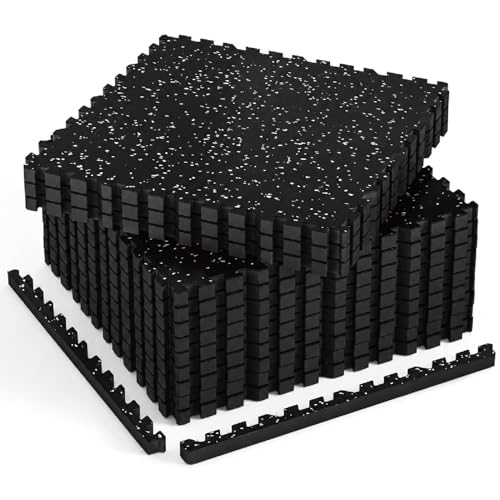
6. Best for maximum cushion & noise reduction: AIRHOP 1″ Ultra-Thick Rubber Top Mat
Pros
- Full 1-inch thickness
- Includes detachable border strips
- Engineered for noise reduction
Cons
- The listing recommends airing out the mats upon unboxing.
AIRHOP’s 1-inch ultra-thick mat features a heavy-duty textured rubber top heat-pressed to an EVA foam base. The 12-pack covers 48 square feet. The listing highlights its use for quiet home workouts, acting as a sound barrier for impact noise, and includes detachable border strips for a finished look.
Best for: High-intensity training in multi-family homes where noise reduction is the top priority.
7. Best for joint comfort and floor protection: AIVORO Interlocking Rubber & EVA Tiles

Pros
- Recycled rubber top layer
- Interlocking edges limit separation
- Cushioned for joint comfort
Cons
- Thickness is listed as 3.94 inches in specs, which contradicts the title; actual usable thickness is unclear from data.
AIVORO tiles feature a dual-layer design with a recycled rubber top bonded to a high-density EVA foam base. The 12-pack covers 48 square feet with 0.6-inch thick tiles. The listing states it helps soften impact for joint comfort, protects floors from equipment, and the interlocking edges limit separation during workouts.
Best for: Low-impact workouts, yoga, or HIIT where joint support and floor protection are key.
8. Best clear about foam-core construction: Dalmbox 0.56″ Rubber Top Foam Mat

Pros
- Clear about foam-core construction
- Textured, non-slip rubber top
- Helps reduce impact and noise
Cons
- Foam core (not solid rubber/TPE)
Dalmbox clearly notes these 0.56-inch thick mats have a foam core with a durable rubber top, not solid rubber. The 12-pack of 24″x24″ tiles covers 48 square feet. The listing states the foam core absorbs impact and vibration, while the textured rubber top provides a stable, non-slip surface.
Best for: Buyers who want a clear understanding they are getting a rubber-top, foam-core mat for everyday workouts.
High-Density EVA Foam Tiles
Made from solid EVA foam, these tiles offer shock absorption and are often lightweight and easy to assemble.
9. Best for a basic, cushioned floor: Haulcove 18-Pack EVA Foam Tiles

Pros
- 18 tiles for layout flexibility
- Dual-texture surface
- Water-resistant and easy to clean
Cons
- Thinner 0.4-inch foam
- Smaller tile size
This set includes 18 dual-texture EVA foam tiles, each measuring 12.6″x12.6″x0.4″, providing 18 square feet of coverage. The listing notes a textured top and bottom layer for balanced comfort, water-resistant surface for easy cleaning, and a lightweight, stackable design for simple storage.
Best for: Creating a simple, cushioned workout area or play space with smaller tiles for flexible layouts.
10. Best for large-area coverage with thick foam: HulkFit 1″ EVA Foam Puzzle Mat

Pros
- 18 large (24"x24") tiles
- 1-inch thick EVA foam
- Noise reducing and shock absorbing
Cons
- The listing does not mention included edge pieces.
The HulkFit set includes 18 tiles, each measuring 24″x24″x1″, made from high-density EVA foam. The listing states it shields floors from scratches, absorbs impact and vibration for quieter workouts, and features a textured slip-resistant surface for yoga and fitness routines.
Best for: Covering a large area with a thick, cushioned foam floor for mixed-use workouts and equipment protection.
11. Best for a simple, customizable foam floor: CAP 1/2″ EVA Foam Puzzle Mat

Pros
- Includes finishing edge strips
- Textured, water-resistant surface
- High-density EVA foam
Cons
- Only 6 tiles per pack (24 sq ft)
This CAP set includes 6 interlocking 24″x24″x1/2-inch tiles, covering 24 square feet. Made from high-density EVA foam, it provides firm cushioning and shock absorption. The listing notes a textured, water-resistant diamond surface and includes finishing strips to create clean outer edges.
Best for: Smaller home gym areas or workout zones where easy customization and a finished edge are important.
12. Best for extra cushioning with finished edges: CAP 3/4″ EVA Foam Mat 2-Pack

Pros
- 3/4-inch thick EVA foam
- Includes finishing edge strips
- Covers 48 sq ft
Cons
- The listing does not mention odor control.
This CAP option is a 2-pack containing 12 interlocking tiles total, each 24″x24″x3/4″, covering 48 square feet. It’s made from extra-thick, high-density EVA foam for shock absorption. Like the other CAP mat, it features a textured, water-resistant surface and includes finishing strips.
Best for: Those who want the clean, finished look of CAP mats with more cushioning from the 3/4-inch thickness.
13. Best straightforward foam tile set: Nazhura 12-Pack EVA Foam Tiles

Pros
- 12 tiles cover 48 sq ft
- Textured surface for grip
- High-density EVA foam
Cons
- The listing does not mention edge pieces or water resistance.
The Nazhura set includes 12 interlocking foam tiles, each 24″x24″x1/2-inch, covering 48 square feet. The listing describes a textured surface pattern for enhanced grip, high-density EVA foam construction for shock absorption, and tool-free assembly with puzzle-piece edges.
Best for: A no-frills, large coverage area of basic shock-absorbing foam flooring.
14. Best for detailed floor protection with edges: bemaxx 18-Pack EVA Foam Tiles

Pros
- Includes edge pieces
- Non-toxic EVA foam
- Anti-slip surface
Cons
- Smaller tile size and coverage area (18 sq ft)
The bemaxx set includes 18 EVA foam tiles (12.6″x12.6″x0.4″) plus edge pieces, covering about 18 square feet. The listing highlights its protective qualities against scratches, dents, and noise, a highly compressed, non-toxic EVA foam with an anti-slip surface, and suitability for various spaces.
Best for: Creating a fully bordered, protected area in a smaller space with included edge pieces.
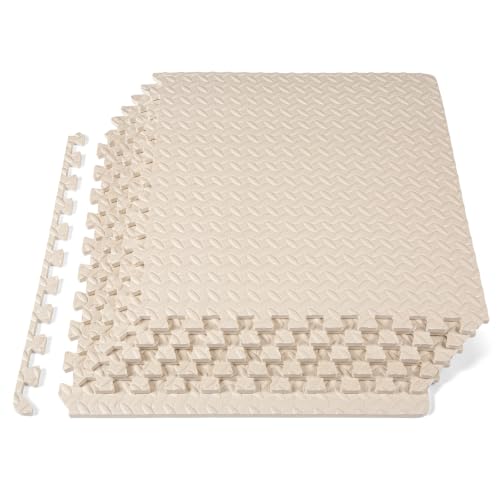
15. Best for a light-colored, versatile foam floor: ProsourceFit 1/2″ EVA Puzzle Mat
Pros
- Light beige color option
- Phthalate-free EVA foam
- Water-resistant and easy to clean
Cons
- Foam may compress slightly under heavy objects
- Only 6 tiles per pack
This ProsourceFit set includes 6 interlocking foam tiles, each 24″x24″x1/2-inch, covering 24 square feet in a beige color. Made from high-density, phthalate-free EVA foam, it’s described as water-resistant, noise-reducing, and easy to clean for use in gyms, play areas, or as a carpet protector.
Best for: Home gyms or play areas where a lighter color is preferred and versatile floor protection is needed.
Specialty & Performance Materials
This group features tiles made from unique materials like TPE for a rubber-like feel without odor.
16. Best overall for heavy-duty use: Baselayer Performance Series TPE Tiles

Pros
- Made from no-odor TPE material
- Firmer density for heavy weights
- Precision interlocking design
Cons
- Edges and corners sold separately
- Smaller tile size (19"x19")
The Baselayer Performance Series tiles are injection molded from premium TPE (thermoplastic elastomer), which the listing describes as providing a resilient, rubber-like feel with no odor. These 1/2-inch thick, 19″x19″ tiles feature a precision interlocking system for a secure fit. The listing states they provide a durable, firmer density surface ideal for heavy weights and high-impact training.
Best for: Lifters and athletes who want a durable, non-porous surface that can handle heavy equipment without the smell of traditional rubber.
How to choose the best gym flooring tiles
Selecting gym flooring is about matching the tile’s properties to your primary workout needs. The right choice protects your subfloor, reduces noise, and provides a safe, stable surface. Consider your main activities: heavy weightlifting demands a firm, dense material, while high-impact cardio or apartment workouts benefit from thicker cushioning for noise dampening. Always ensure your equipment is stable on the surface you choose.
What to look for
- Material: TPE offers a rubber-like feel often without odor. EVA foam is lightweight and cushioned but can compress. Dual-layer mats with a rubber top and foam base aim to combine grip with shock absorption.
- Thickness & Density: Thicker tiles (3/4″ to 1″) generally offer more cushioning for joints and noise reduction. However, density matters too; a firm, half-inch TPE tile may be more stable for lifting than a softer, thicker foam.
- Coverage & Tile Size: Calculate the square footage you need to cover. Larger tiles (24″x24″) install faster, while smaller tiles (12″x12″ or 19″x19″) can be easier to handle and fit around obstacles.
- Surface & Edges: A textured surface improves traction. Check if the listing includes interlocking border or edge pieces to finish the perimeter neatly and prevent tripping.
For more on setting up a safe home gym, see our guide on How to Choose Fitness Equipment Safely and Keep It Working.
FAQ
What’s the difference between EVA foam and rubber gym flooring?
EVA foam is a lightweight, cushioned material that provides good shock absorption. It can compress under very heavy, static loads. Rubber flooring, or tiles made with TPE (a rubber-like material), is generally denser, more durable, and provides a firmer, more stable surface for heavy weights. Dual-layer mats attempt to blend the two, with a rubber top for durability and grip over a foam base for cushioning.
Can I use these tiles on carpet?
Most listings for these interlocking tiles assume installation on a hard, flat surface like concrete, wood, or tile. Using them on carpet may create an unstable, uneven foundation for weightlifting equipment or exercises requiring balance. The ProsourceFit listing mentions it can be used as a carpet protector, but for safety, always follow the manufacturer’s recommendations for the intended surface.
How do I clean and maintain gym flooring tiles?
Most tiles listed here have water-resistant surfaces that can be wiped clean with a damp cloth and mild detergent. Avoid harsh chemicals that could degrade the material. For tiles with interlocking edges, you can disassemble sections for a more thorough cleaning underneath. Always check the specific care instructions in the product manual.
Are these tiles suitable for dropping heavy weights?
While thicker dual-layer and high-density foam tiles are marketed for shock absorption, no interlocking tile system is a substitute for dedicated Olympic lifting platforms or bumper plates designed for weight dropping. For occasional, controlled drops, the thickest options (1-inch) with rubber tops may offer the best protection, but for regular, heavy dropping, a specialized platform is recommended to protect both your floor and the tiles themselves.
References
- Amazon product listings and manufacturer specifications (accessed October 2026)
- American College of Sports Medicine (ACSM)
- Equipment Selection
- How to Choose Fitness Equipment Safely and Keep It Working